

Frequently asked questions about food waste collections
How do I recycle food waste?
- Line your kitchen caddy with a compostable liner, old bread bag, carrier bag, newspaper, or kitchen roll.
- Put in any food waste — peelings, tea bags, leftovers, and more.
- Empty your caddy into your brown bin regularly.
- Put your brown bin out every week on your collection day.
Do I need special containers?
You only need the brown food waste bin.
- Most household in Sandwell have already received a food waste bin.
- If yours is lost or damaged, you can request a replacement.
- You don’t need a special kitchen caddy — any plastic tub (like an empty ice cream tub) works well for collecting food scraps indoors.
When is my food waste collected?
Food waste is collected every week in a separate vehicle.
- Put your bin out by 5.30am on collection day, or the night before.
- Collections can happen at any time during the day.
What do I need to do if I stopped using the service?
If you haven’t used your brown bin for over three weeks, you’ll need to re‑register.
My collection was missed, what should I do?
If your food waste bin wasn’t emptied, please report it straight away. Only food waste and your caddy liner should be in the brown bin.
Report a missed bin collection
How do I keep my containers clean?
You can keep your caddy and bin clean by:
- Lining them with old bags, bread wrappers, newspaper, or kitchen roll
- Using compostable liners if you prefer
- Washing them with hot soapy water, vinegar, or disinfectant
- Putting your small caddy in the dishwasher (up to 60°C)
Why should I recycle food waste? 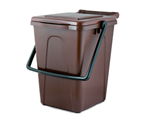
The average household throws away around £1,000 of food every year.
- If food goes in your non-recycling (grey) bin, it is incinerated or sent to landfill, which is bad for the environment.
- When you use your brown food waste bin, your food is turned into fertiliser and clean energy instead.
- Keeping food waste out of your kitchen bin also helps keep it cleaner and less smelly.
- Seeing what you throw away can help you reduce waste and cut your shopping bill.
Recycling your food waste is one of the simplest ways to help the environment — and it can even save you money.
How is food waste recycled?
Your food waste is taken to a local site in Stourbridge. There, it is:
-
Put into a sealed vessel (like a giant pressure cooker).
- Broken down naturally by bacteria.
- Turned into:
- Biogas, which is used to make energy.
- Nutrient‑rich fertiliser, used by farmers to grow more food.
You can explore how composting systems work if you’d like to understand the process more deeply.
Why do I need to register for food waste collections?
We are improving the service so that food waste vehicles only visit homes that use the service. This helps us:
- Reduce unnecessary travel
- Lower our carbon footprint
- Make collections more efficient
If you want to start using the service, please let us know. There is currently high demand, so new brown bins may take a little longer to arrive. If you still have your original bin, please tell us when you register.
Do I need to pay?
No — weekly food waste collections are free.
How do I stop rodents and pests getting into my bin?
Your food waste bin is designed to keep rodents and pests out.
- Make sure the lid is fully closed.
- Turn the handle backwards over the lid to lock it.
What if I don’t produce much food waste?
Even small amounts make a difference. Items like banana skins, tea bags, and bones are unavoidable — and all recyclable. On average, a third of the waste in Sandwell’s black bins is food waste that could have gone in the brown bin.
What CAN I put in my food waste bin?
You can recycle all food waste, including:
- Meat and bones
- Fish and shells
- Eggs and eggshells
- Dairy products
- Bread, cakes, pasta, rice
- Fruit and vegetables
- Tea bags and coffee grounds
- Fats like lard
- Pet food (tinned or dry)
- Small amounts of sauces, gravy or custard
- Any meal leftovers
What CAN'T I put in my food waste bin?
Please don’t include:
- Packaging
- Cardboard
- Foil
- Plastic film
- Glass
- Garden waste
- Cat litter or animal bedding
- Liquids
- Any other recycling