

People in Sandwell and across the West Midlands are being encouraged to become Antibiotic Guardians and take simple steps to help tackle one of the world's biggest public health challenges.
The call to sign up as Antibiotic Guardians is part of World Antimicrobial Resistance (AMR) Awareness Week (18-24 November).
New national surveillance data from the UK Health Security Agency (UKHSA) shows antibiotic-resistant infections continue to rise, with an average of 406 cases reported every week in England during 2025.
The data, from the English Surveillance Programme for Antimicrobial Utilisation and Resistance (ESPAUR) Report, also highlights that older people and those living in more deprived communities are disproportionately affected, underlining the importance of using antibiotics responsibly and preventing infections wherever possible.
Local authorities, NHS Birmingham and Solihull Integrated Care Board (ICB) and NHS Black Country ICB, NHS Trusts, the UK Health Security Agency (UKHSA), Community Pharmacy Black Country and other partners from across the region are joining forces to raise awareness of antimicrobial resistance and promote the responsible use of antibiotics.
Antibiotics are used to treat bacterial infections. However, they do not work for viral infections such as colds, flu, most coughs and sore throats. Using antibiotics when they are not needed can make some infections harder to treat in the future.
This year's campaign focuses on the role everyone can play as an Antibiotic Guardian by making a simple pledge to help preserve these vital medicines for future generations. People are encouraged to learn more about antibiotics, use them responsibly and follow healthcare advice when they are prescribed.
Alongside responsible antibiotic use, people are also encouraged to consider self-care for common winter illnesses and make use of community pharmacy services where they live. Many common conditions can be managed without antibiotics and pharmacists can provide expert advice on treating symptoms, preventing infections and deciding whether further medical help is needed.
Community pharmacies offer convenient access to health advice and support for a range of minor illnesses and can help people find the right care at the right time. Pharmacies can also safely dispose of unwanted or expired antibiotics and other medicines.
The campaign will also promote practical steps to prevent the spread of infections, including regular handwashing, keeping vaccinations up to date and following health advice when unwell.
Healthcare professionals across the region are supporting the campaign through awareness raising in GP practices, hospitals, community settings and pharmacies. Activity will include promotion of the national Antibiotic Guardian pledge and targeted engagement with families and communities.
The campaign also highlights local initiatives such as Super Bodies, which supports parents and carers to understand common childhood illnesses and when antibiotics may or may not be needed. Partners will use family-focused resources and community engagement opportunities to help reach parents, carers and young families across the region.
Councillor Ritchie Massey, Sandwell Council's Cabinet Member for Adult Services, Health and Wellbeing, has made the pledge to be an Antibiotic Guardian.
He said: "Most of us have relied on antibiotics at some point in our lives, which is why it's so important that we protect them. This campaign is about helping people understand when antibiotics are needed and where to go for the right advice.
“I encourage people to play their part, to learn more about antibiotics and to consider making the simple pledge to be an Antibiotic Guardian and use antibiotics responsibly, to help protect future generations.
“I also urge people to use their local pharmacies for health advice and for minor illnesses, and to safely dispose of unwanted or expired medicines.”
Sarah Smith, UKHSA Consultant in Health Protection leading on AMR for the West Midlands, said: “Antimicrobial resistance (AMR) is a global health emergency, and we all have a part to play to keep antibiotics working. Antibiotic-resistant bacteria are less likely to respond to treatment, causing serious complications including bloodstream infections, sepsis and hospitalisation.
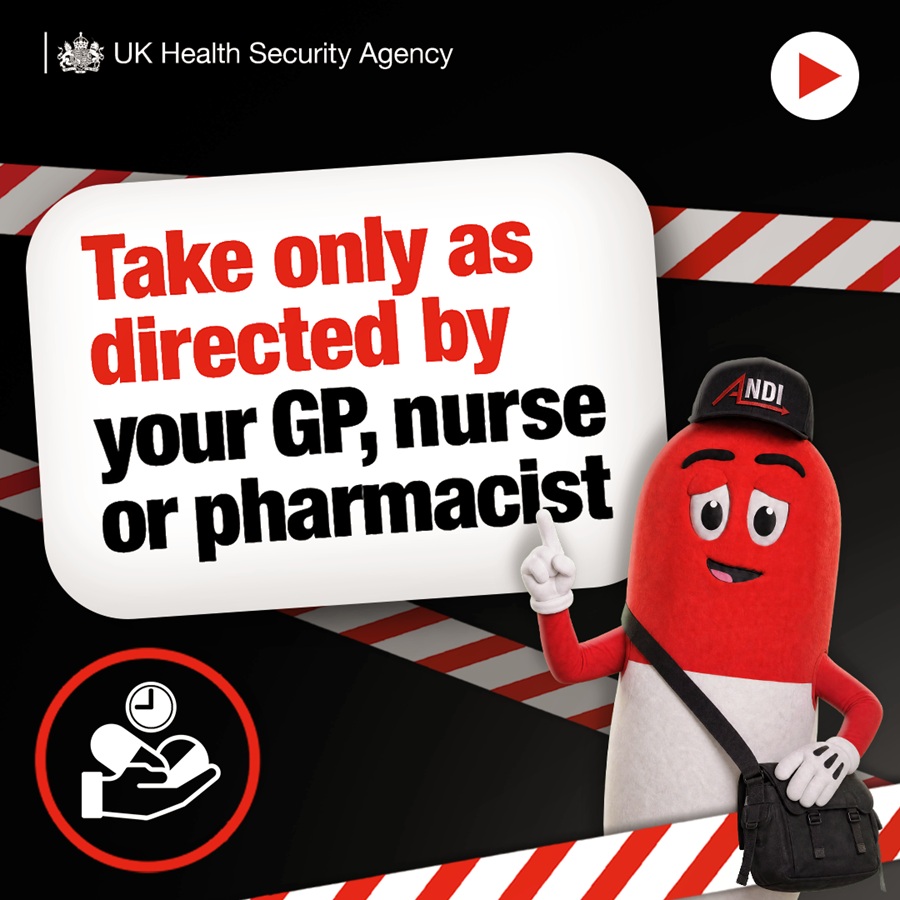
"This is why it’s important to take antibiotics only when they are prescribed and necessary for the condition. Overuse and inappropriate use of antibiotics are key factors in the rise of superbugs – this includes taking antibiotics for things like colds, sore throats and coughs, which are viral infections, so cannot be treated with antibiotics.
"Another problem is people not finishing their course of antibiotics, which can make the infection more resistant and harder to treat, something we see with cases of tuberculosis (TB) – which can result in much longer treatment and higher mortality rates.”
People can help protect antibiotics for future generations by becoming an Antibiotic Guardian and making a simple pledge to use antibiotics responsibly.
Find out more information and become an Antibiotic Guardian.
People are also encouraged to return any unwanted or expired antibiotics to their local pharmacy for safe disposal and prevent antibiotics from getting into the environment. Antibiotics should not be thrown away in household waste.
People can visit the NHS website for self-care advice on managing winter illnesses such as colds and flu or find a local pharmacy for further advice.
To find out more about antimicrobial resistance, visit the NHS website.