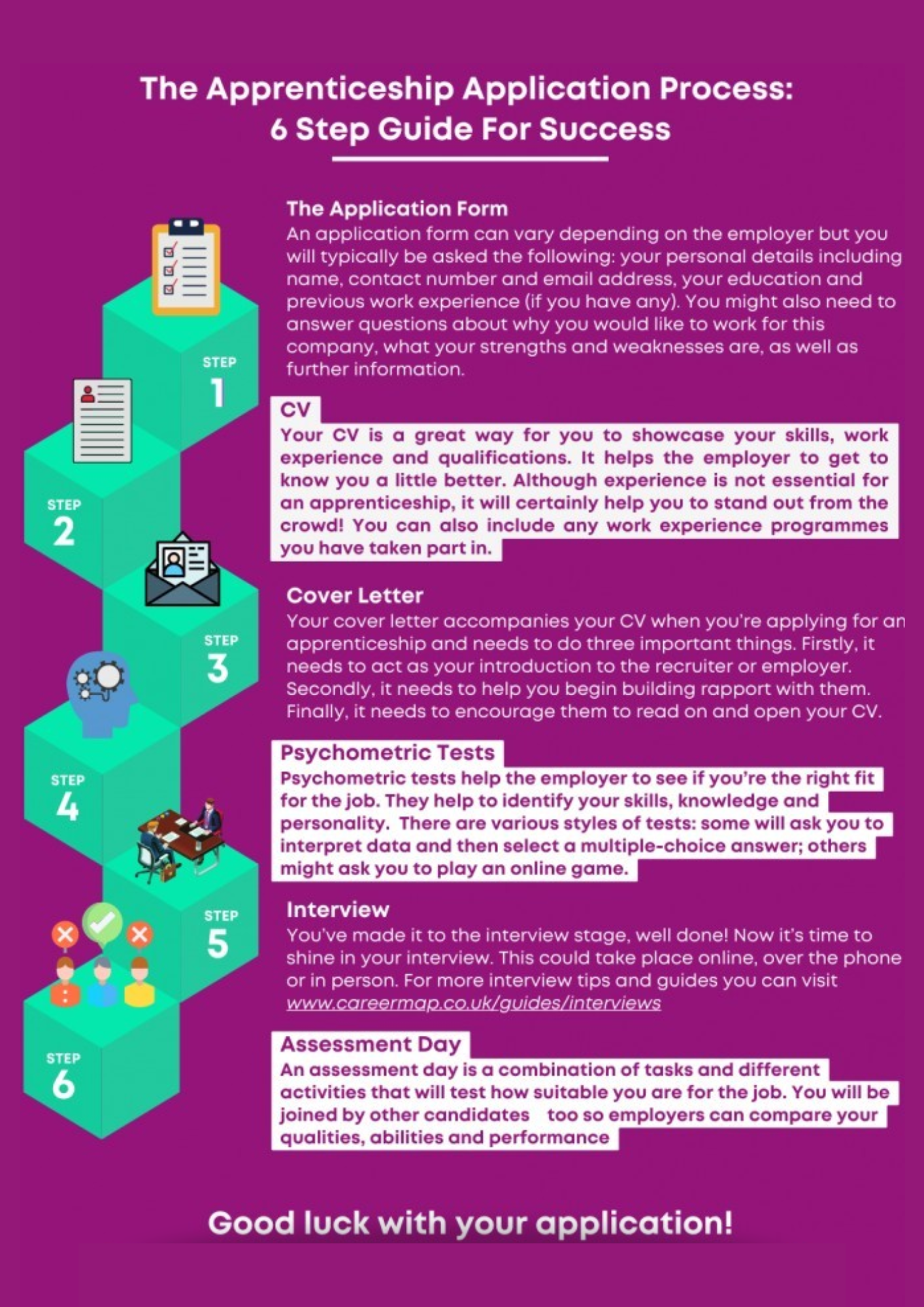
How to Apply for an Apprenticeship online

Read the Apprenticeship Description carefully
Before clicking Apply:
-
Check:
-
Age requirements
-
Entry grades (GCSEs or predicted grades)
-
Location and travel
-
Working hours
-
-
Make sure you understand:
-
What the job involves
-
What training you’ll get
-
If you can explain the role in your own words, you’ve read it properly.
2. Create a Simple, Strong CV
You don’t need work experience to have a good CV.
Include:
-
Name & contact details (professional email)
-
Education (school, subjects, predicted/achieved grades)
-
Skills (teamwork, time management, communication)
-
Experience:
-
Part-time work
-
Work experience
-
Volunteering
-
Clubs, sports, caring responsibilities
-
Use short bullet points and correct spelling.
3. Answer Application Questions Properly (Not Quickly)
Many online applications ask:
-
“Why do you want this apprenticeship?”
-
“Why should we choose you?”
-
“What skills do you have?”
Tips:
-
Avoid one-line answers
-
Don’t copy and paste the same answer for every application
-
Mention:
-
The company
-
The role
-
What you want to learn
-
Employers can tell when you’ve rushed.
4. Use a Professional Email Address
Bad example ❌
Good example ✅
Check your inbox daily and reply politely.
5. Check Spelling and Grammar (This Really Matters)
Mistakes make it look like you don’t care.
Before submitting:
-
Re-read everything
-
Use spellcheck
-
Ask a teacher, parent, or trusted adult to proofread
This is one of the biggest reasons applications are rejected.
6. Show Enthusiasm, Not Confidence You Don’t Have
You are not expected to know everything.
Good phrases:
-
“I’m eager to learn…”
-
“I’m keen to develop skills in…”
-
“I’m motivated and reliable…”
Avoid pretending you’re an expert.
7. Apply Early (Don’t Wait for the Deadline)
Apprenticeships often:
-
Close early
-
Interview as applications come in
✔ Apply as soon as you’re ready
✔ Keep a list of what you’ve applied for
8. Keep Your Online Presence Clean
Some employers may check:
-
Social media
-
Public profiles
Check:
-
Privacy settings
-
Old posts or photos
-
Usernames
If you wouldn’t show it to an employer, remove or hide it.
9. Prepare for Online Tests or Video Interviews
Some applications include:
-
Short online assessments
-
Recorded video answers
Tips:
-
Find a quiet space
-
Dress smart-casual
-
Speak clearly and smile
-
Practice answers out loud first