
CV Advice
Advice for Writing Your First CV (Ages 16–18)
1. Keep It Simple and Clear
Your CV should be:
-
One page only
-
Easy to read
-
Well laid out with clear headings
-
Written in a simple, professional font
You don’t need lots of experience—employers understand you are just starting out.
2. Start with Your Personal Profile
This is a short paragraph at the top explaining:
-
Who you are
-
What you’re looking for
-
Your key strengths
Example:
Motivated and reliable student seeking part-time work. I am keen to develop new skills, work as part of a team, and gain practical experience.
3. Focus on Skills, Not Just Experience
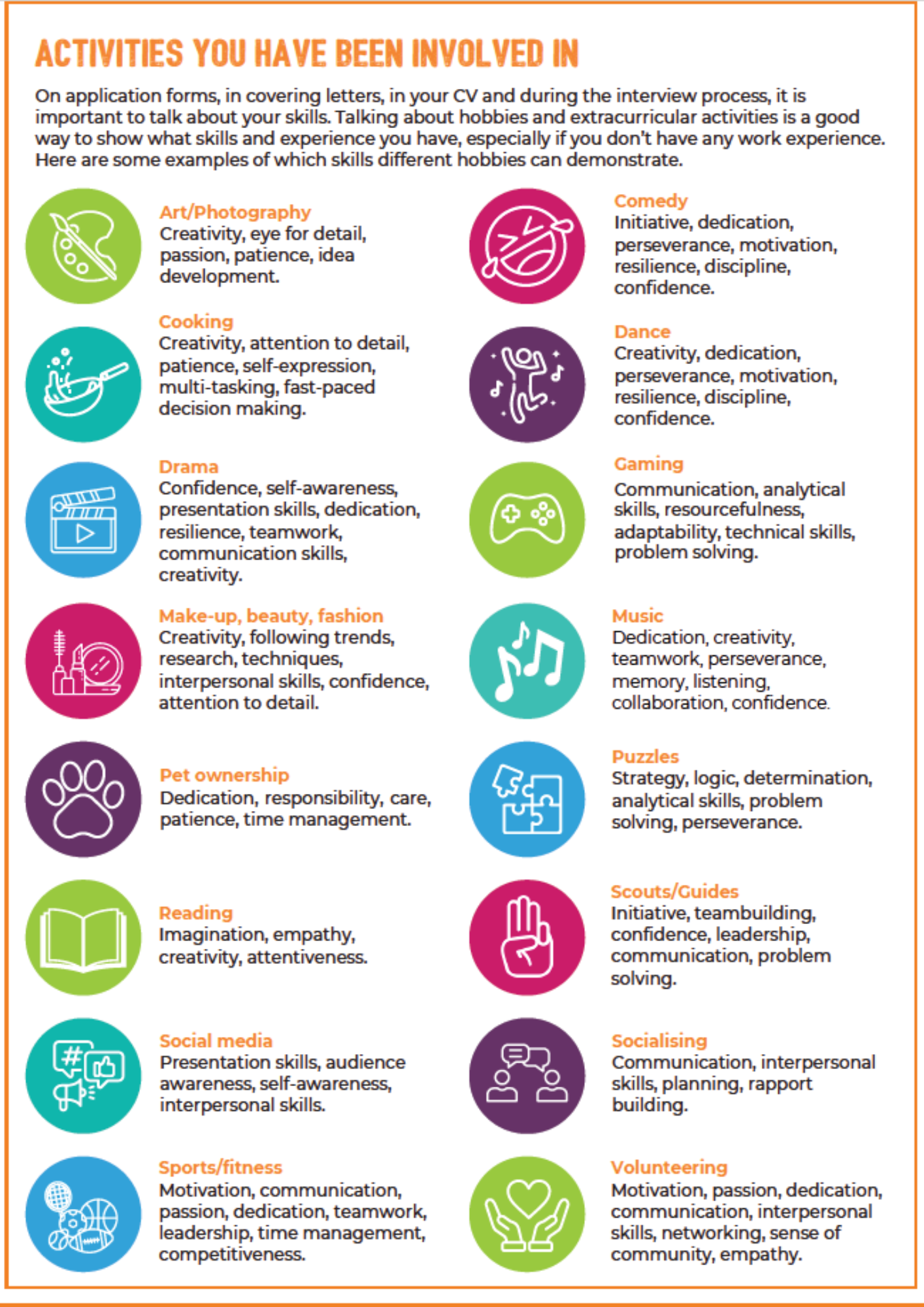
Even if you haven’t had a job, you still have valuable skills from:
-
School or college
-
Work experience
-
Volunteering
-
Clubs, sports, or hobbies
-
Caring responsibilities
Include skills such as:
-
Communication
-
Teamwork
-
Time management
-
Organisation
-
IT skills
-
Problem-solving
4. Include Education Clearly
List:
-
Your school or college
-
Subjects studied or being studied
-
Predicted or achieved grades (if appropriate)
You don’t need to list every qualification—just the most relevant ones.
5. Show Responsibility and Commitment
Employers value attitude as much as experience. Mention:
-
Attendance and punctuality
-
Helping others
-
Leadership roles (e.g. class rep, team captain)
-
Reliability and willingness to learn
6. Use Positive, Action Words
CV ContentTransferable Skills Everyone has ‘transferable skills’. One example is ‘being a good communicator’ – someone who is sympathetic, a good listener and able to help others to sort out their problems. This skill is needed for a range of different jobs, for example, a doctor, shop assistant or a teacher. Look at the list below and identify some of your transferable skills. Add these to your CV:
|
||||||||||||||||||||||||||||||||||||||||||||||||||||||||
| Use positive ‘buzz’ words:
|
||||||||||||||||||||||||||||||||||||||||||||||||||||||||
| Use sentences starting with:
|
||||||||||||||||||||||||||||||||||||||||||||||||||||||||
| Include phrases like:
Emphasise your positive qualities:
|
||||||||||||||||||||||||||||||||||||||||||||||||||||||||
| Include experience:
|
||||||||||||||||||||||||||||||||||||||||||||||||||||||||
| Include any special skills:
|
||||||||||||||||||||||||||||||||||||||||||||||||||||||||
| Include accomplishments, achievements and skills you have developed in your social life or out of school activities:
|
||||||||||||||||||||||||||||||||||||||||||||||||||||||||
7. Tailor Your CV
Change your CV slightly for each application:
-
Match your skills to the job description
-
Use keywords from the advert
-
Focus on what the employer is looking for
8. Check Spelling and Grammar
Always:
-
Proofread your CV
-
Ask a teacher, careers adviser, or family member to check it
-
Make sure your contact details are correct
9. Be Honest
Never exaggerate or lie:
-
Employers may ask questions at interview
-
It’s okay to say you are still learning
10. Remember: Everyone Starts Somewhere
Your first CV is not about being perfect—it’s about showing:
✔ A positive attitude
✔ Willingness to learn
✔ Reliability
✔ Potential
Employers know you are early in your career. What matters most is your effort, attitude, and enthusiasm.