
Place Based Health Needs Assessment (PBHNA): Park Lane Estate, Tipton
Park Lane Estate, Tipton
A Place-based Health Needs Assessment (PBHNA) studies a local area to understand health issues and priorities. It looks at factors like housing, education, and poverty, as well as local strengths and inequalities.
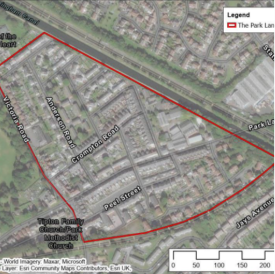
The Park Lane estate in Tipton was chosen for this PBHNA. It has 372 homes plus small shops and food outlets. The area also links with the Net Zero Neighbourhood project, part of plans to reach net zero in the West Midlands by 2041, making this a good time to join the two initiatives.
Objectives
- To conduct a PBHNA focused on the Park Lane estate.
- To identify key health issues, priorities, and inequalities affecting the community.
- To gather and collate information on wider determinants of health (such as housing, education, poverty).
- To assess local assets and build on local strengths.
- To align health research with the local Net Zero Neighbourhood initiative, making use of existing community engagement opportunities.
Why is this research important?
A Place-based Health Needs Assessment (PBHNA) looks at a specific local area to understand local health issues and priorities.
- PBHNAs consider the wider determinants of health, including housing, education, poverty and more.
- They can assess local assets, build on local strengths, and identify health inequalities.
The Park Lane estate in Tipton has been chosen for this PBHNA.
- It contains 372 residential properties plus small shops and food outlets.
- It overlaps with the Net Zero Neighbourhood initiative, part of West Midlands Combined Authority’s plan to achieve net zero across the region by 2041.
- A net zero neighbourhood is a community designed to produce as much renewable energy as it consumes, minimizing carbon emissions through efficient buildings, clean transport, and sustainable resource use.
- The Net Zero approach includes community engagement, which provides a timely opportunity to link with a PBHNA.
What we did, with who and how
Setting the Parameters
- Agreed the boundaries for the study, matching them to the Net Zero Neighbourhood so data could be compared, with input from the community.
- Mapped local assets (buildings, services, community facilities).
- Carried out stakeholder mapping to identify local organisations and groups.
- Formed a steering group, including the Public Health team and the local community organisation, Bangladeshi Women’s Association, who run the Tipton Muslim Community Centre.
Agreeing Methodology and Themes
- Steering group agreed how best to gather community insight:
- Using existing data.
- Resident focus groups.
- Youth engagement sessions.
- Resident survey.
- Funding was provided to thank participants:
- Adults received supermarket vouchers if they attended all sessions.
- Youth club received donations, with young people choosing how to spend it.
- Topic guides were developed around agreed themes, shaped by local insights and a review of other health needs assessments.
- Translators were included to make sure people whose first language isn’t English could take part.
- Youth workshops also included creative tasks (e.g. designing an “ideal town”).
Analysis
- Notes and transcripts from groups were organised by theme.
- Thematic analysis was used to identify key patterns and issues.
Data and Insight
- A local data dashboard was created, covering health, demographics, and population details.
- Data sources included:
- Index of Multiple Deprivation.
- National census.
- Fingertips public health platform.
- This dashboard informed the Health Profile of the Park Lane Estate
Findings
1. Survey – A short questionnaire that let residents share their views and everyday experiences (137 responses from 372 households)
The survey included a number of themes shown below:
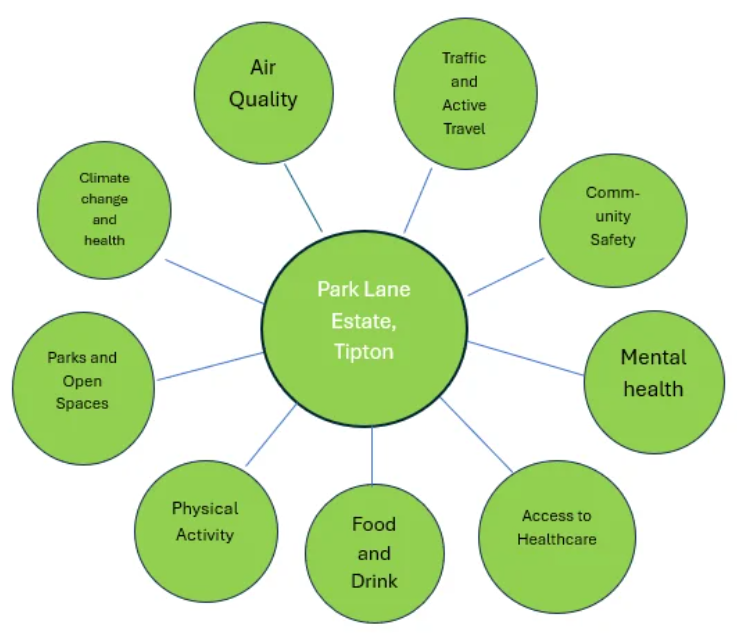
Themes for the survey
- A Survey came from the Net Zero Neighbourhood work and covered net zero, housing, energy and active travel.
- Most respondents were from Pakistani and Bangladeshi communities.
- Two main themes emerged from the survey: climate change & health and traffic & active travel.
Climate change & health (from survey)
- Most people hadn’t heard of the term “net zero” (82 not familiar; 46 slightly; 9 very).
- Everyone said they recycle; 45 said they use public transport as a carbon-saving action.
- 119 said they’re willing to change habits to cut their carbon footprint.
- Main motivators: saving money and health benefits.
Traffic & active travel (from survey)
- Preferred transport: car (63), walking (47).
- Focus groups suggest people see public transport as unreliable, pushing them towards car use.
2. Focus groups – Group conversations where local people discussed concerns, problems and improvements that matter most to them (18 residents; women’s and men’s groups; with a validation session).
The focus groups discussed 7 themes shown below:
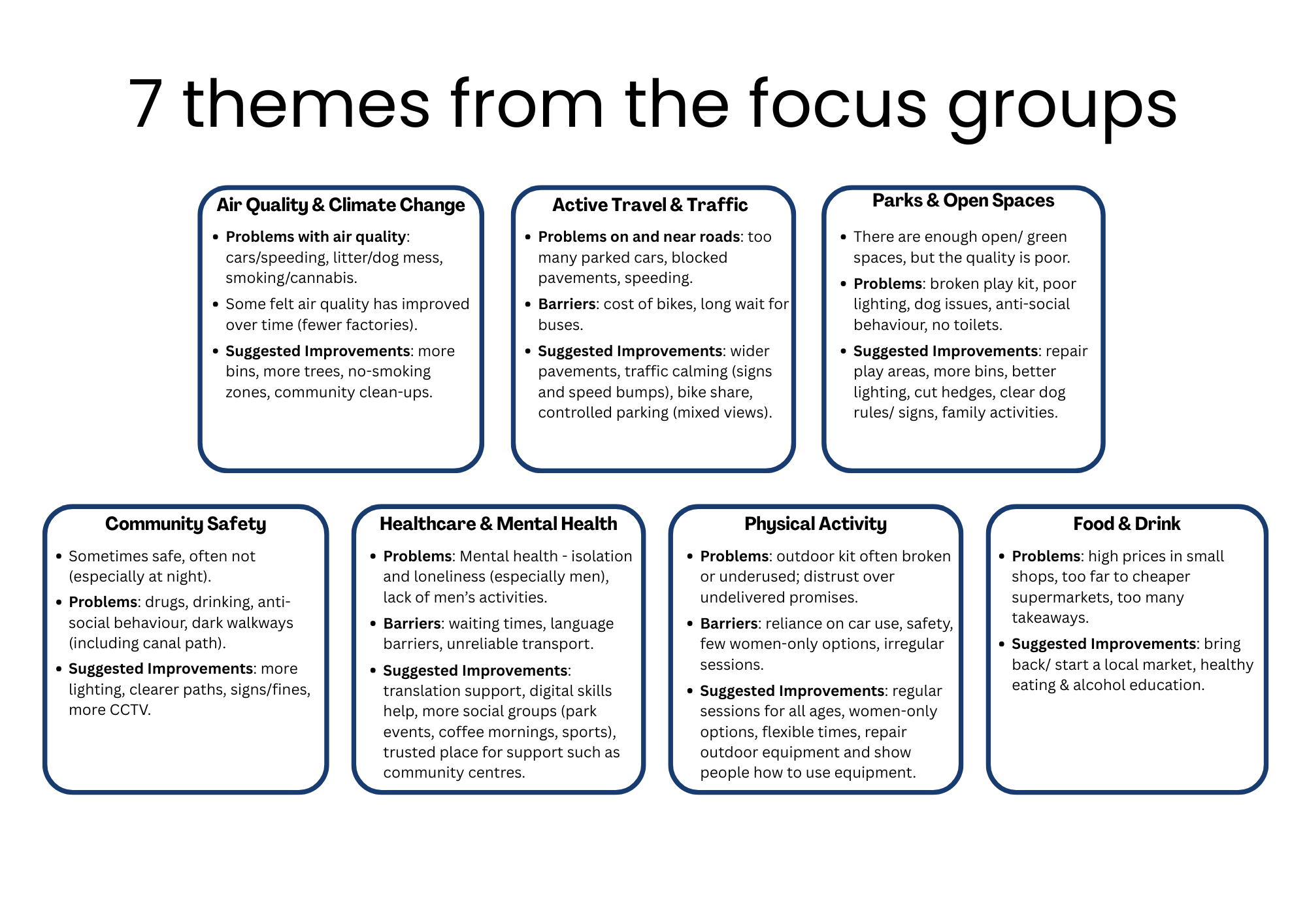 Themes for the focus group
3. Youth engagement workshops – Fun, interactive sessions where young people shared their ideas for a healthier, happier community (two workshops: 11 girls, 9 boys; ages 11–17)
Images created by the “ideal town” exercise in pictures below:
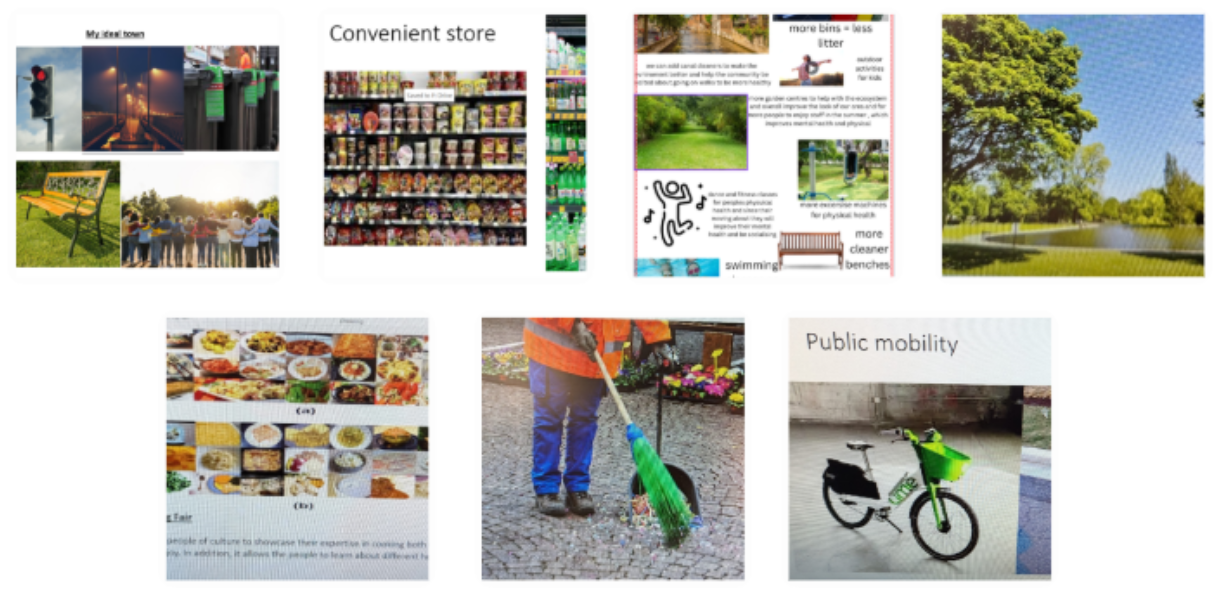
Images created by the “ideal town” exercise in pictures above.
“Ideal town” exercise showed a few recurring ideas
- More bins and cleaner paths, better lighting, safer crossings/road safety, wider pavements.
- Active travel options (bike/scooter sharing), more physical activity and park equipment, benches.
- Healthier food choices (incl. new convenience store options), fresh fruit market.
- More community events.
Youth focus groups – key points
- Safety: sometimes feel safe, sometimes not; visible drug dealing, reports of violence/robbery; want more police presence. The centre feels like a safe space.
- Active travel: speeding cars and e-scooters, cars on pavements, poor pavement quality; canal path needs cleaning.
- Food: few affordable healthy options after school; mainly small shops or fast food.
- Physical activity: want better, older-kids’ play kit, improved football pitches with nets, girls-only activities.
- Mental health: strong sense of community helps; litter and boredom harm mood; worries about fighting, bullying, racism.
The focus groups helped to create some recommendations to improve Tipton:
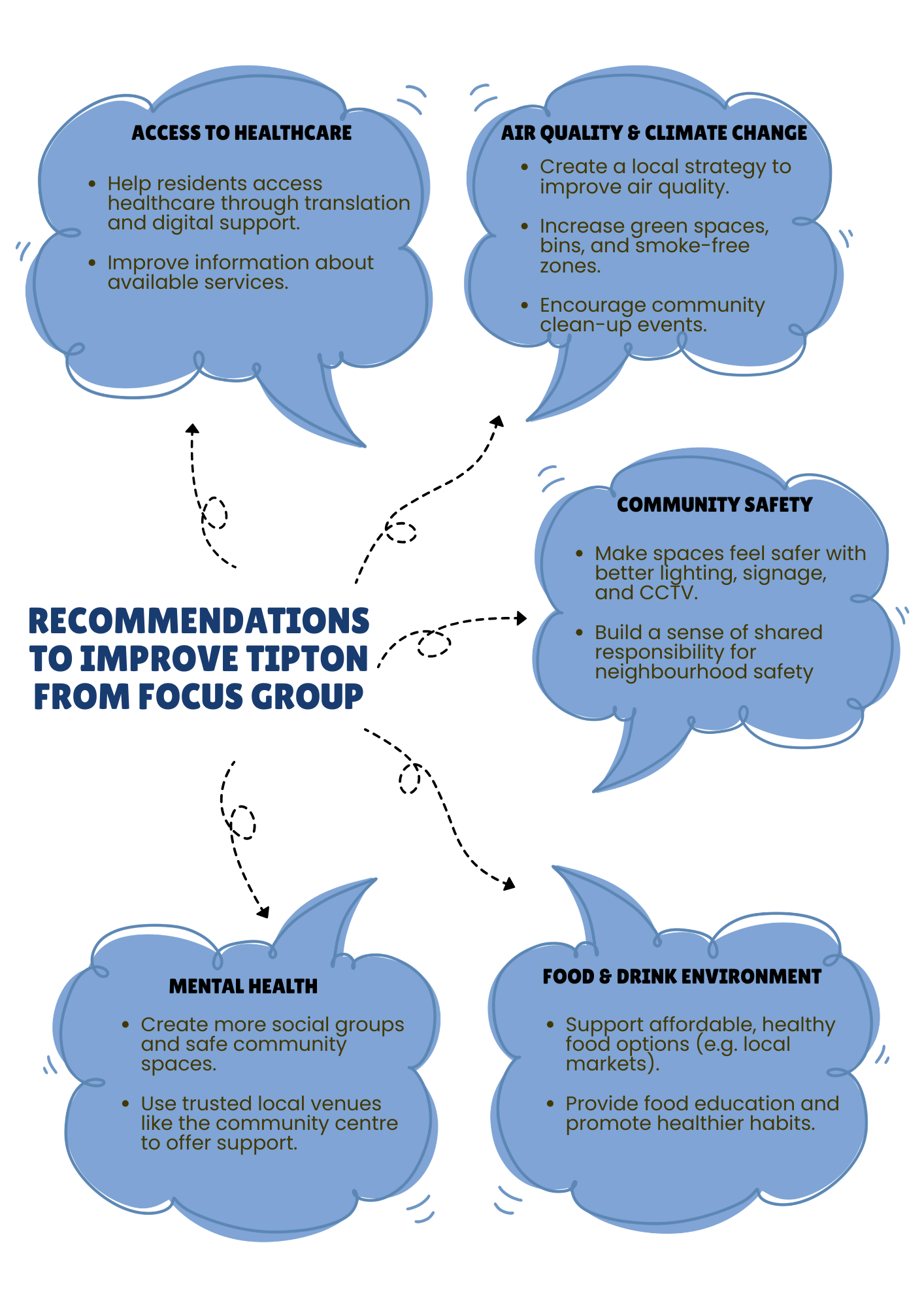
Recommendations to improve Tipton from focus group
Skills Development
Public Health staff built new skills in leading focus groups. This gave them more experience in community engagement and helped strengthen how they work with local residents.
Benefits for Sandwell
Local health and wellbeing needs were identified by listening directly to residents. Information was gathered through surveys, focus groups, and community workshops, giving people from different backgrounds the chance to share their views. This means the findings reflect more than just numbers, they reflect real-life experiences.
To learn more please contact:
Or visit: