Stage 1 conclusions
Stage 1 of the work has been focused on gathering data, knowledge, information and views on the character of the borough. This analysis has generated three outputs which can be downloaded here:
- A Baseline Report - which focuses on character analysis, data and mapping, and review of the current context.
- An Engagement Report - which summarises the events and activities undertaken to draw in local knowledge and views to help inform the priority themes for the Design Code.
- A Conclusions Summary - which outlines the common threads between the baseline analysis and the engagement inputs
In addition, an accessible Word document has been prepared which includes the Conclusions Summary as well as key findings from the engagement activities. This can be downloaded here.
Stage 1 engagement
The engagement for the Sandwell Design Code seeks to meaningfully involve the community throughout the process, helping to shape a collaborative design strategy that reflects local insight, history, and lived experience. The stories, knowledge, and everyday needs shared by residents and stakeholders reveal what people value most about Sandwell, while also highlighting the areas where change and improvement are needed. This depth of understanding is central to creating a Design Code that is rooted in the community and guided by the people who know it best.
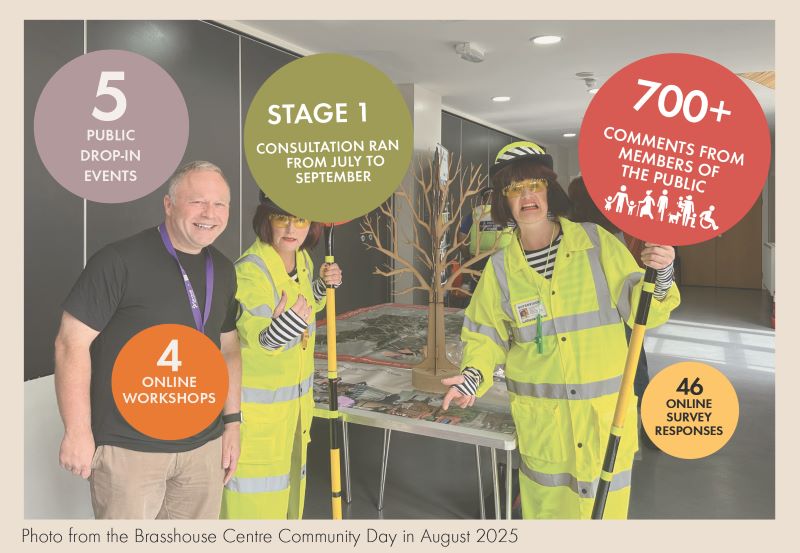
Between June and the end of September 2025, the Design Code team visited all parts of the borough and met with a range of community groups to gain insight and understanding.
Five public pop-up events were held - each offering an informal opportunity for passers-by and visitors to get involved, ask questions and explore what is special about their neighbourhood and what should inform the design of new development. These events allowed for extensive discussions and for local people to understand the value that a Design Code could have in improving the quality of local areas. In addition, an online survey asked local people for views on their neighbourhood, recent new development and their priority issues for change.
Findings
The team have analysed all the inputs, and the reports above provide a detailed insight across all the activities.
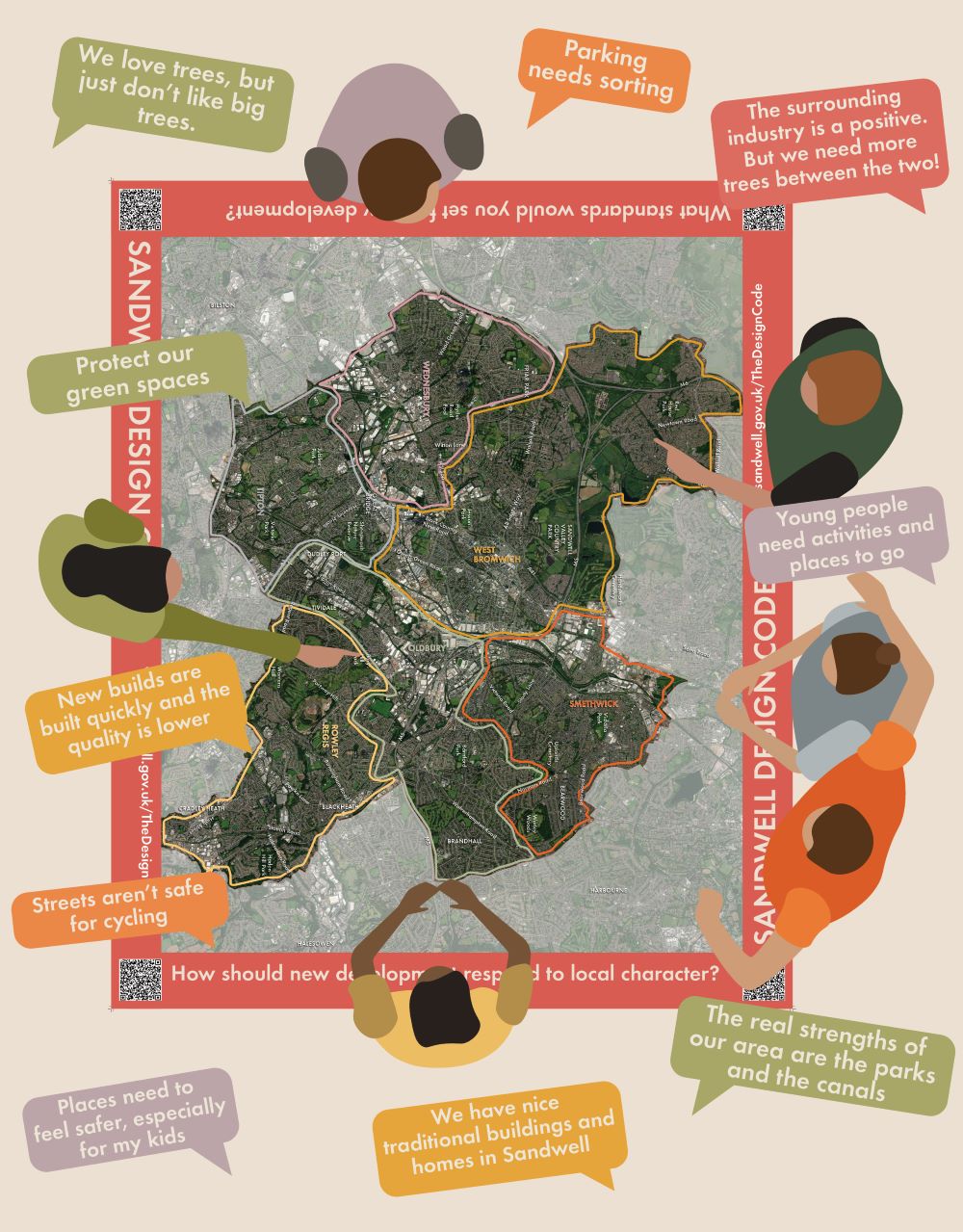
Overall the five most common topics raised across all the engagement activities were:
- Green spaces – existing parks are highly valued, and people want to see them protected, at the same time people want to see more green spaces (and trees) and to see this infrastructure well maintained.
- Housing – there is a desire for better quality housing and more affordable housing, but also that new homes need to better match needs including multi-generational living.
- Safety – there is a strong sense of community, but people want streets and spaces to feel safer and for there to be more provision for young people.
- Community infrastructure – there is concern about community facilities and spaces reducing, people want to see more community spaces (indoor and outdoor) delivered and supported.
- Transport infrastructure – local people want walking and cycling to be much more attractive and safe, and a stronger strategy on residential parking in new developments that avoids overspill onto neighbouring streets.
Other topics that came up frequently included: a desire for better quality design and materials, improved maintenance, improved pedestrian accessibility, better recognition of the importance of the canals as well as local character more generally, and stronger and greener boundary treatments.